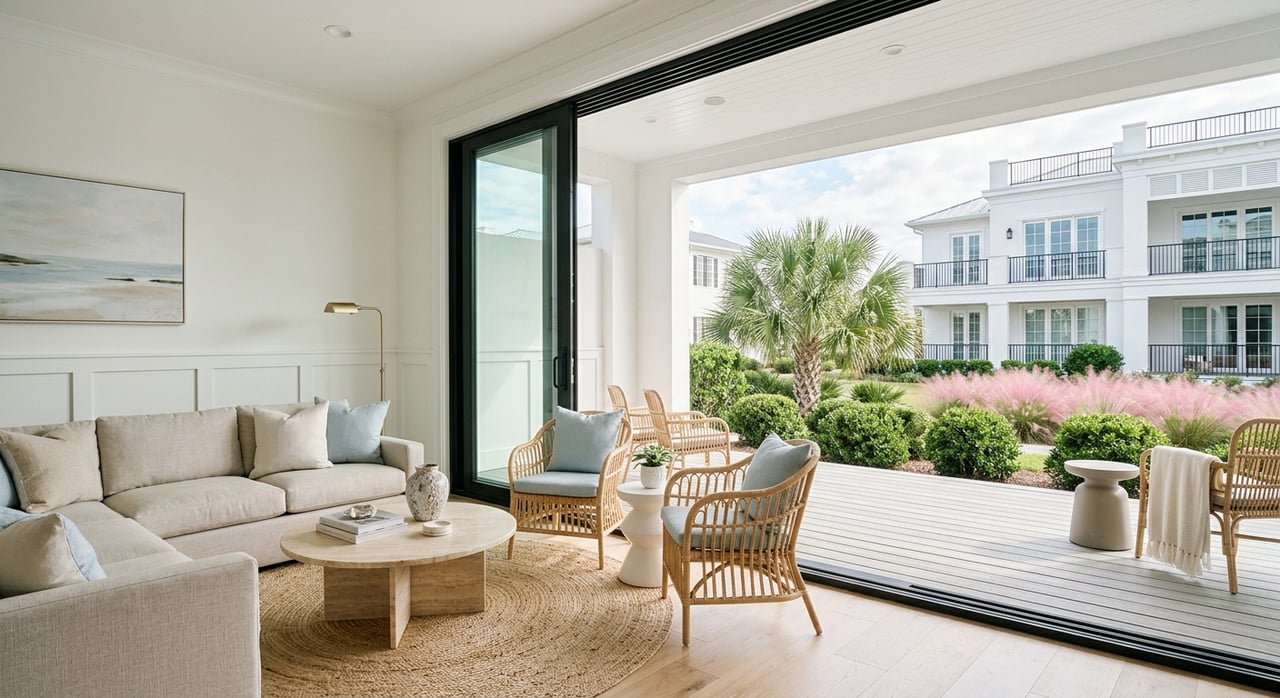
How to Sell a Condo in Myrtle Beach With Confidence
July 2, 2026
July 2, 2026
If your Myrtle Beach condo is about to hit the market, you may already sense that selling it is not quite the same as selling a single-family home. Buyers tend to compare buildings, HOA costs, rental rules, and condition details very closely, and condos are moving more slowly than the broader local market. The good news is that with the right pricing, preparation, and marketing plan, you can still sell with confidence. Let’s dive in.
As of June 28, 2026, Redfin shows 1,808 condos for sale in Myrtle Beach at a median listing price of $190,000. Typical time on market is 123 days, with about one offer per listing. That points to a market where buyers usually have choices and sellers benefit from a thoughtful, realistic approach.
The broader Myrtle Beach market is moving faster by comparison. Realtor.com reports a median listing price near $279,900, around 70 days on market, and homes selling for 2.88% below asking price on average in May 2026. For condo owners, that gap matters because it suggests your unit may need stronger positioning than the average home in the area.
In Myrtle Beach, condo pricing is rarely just about square footage or ZIP code. Building type, beach access, HOA structure, amenities, and rental rules can all influence how quickly a unit attracts attention. Buyers often narrow their search by these details before they ever schedule a showing.
ZIP-level data shows why a broad pricing approach can miss the mark. Realtor.com reports 87 days on market in 29577 and 109 days in 29572. That variation is a reminder that your condo should be priced against true building-level competition whenever possible, not just against the wider city.
A confident pricing strategy starts with the reality of today’s condo market. With about one offer per listing and a slower pace than the broader market, overpricing can cost you time and momentum. A well-priced condo is more likely to generate cleaner interest early, when your listing is still fresh.
Myrtle Beach draws a wide range of condo buyers, and each group tends to look for different things. The area welcomes more than 17 million visitors annually, includes 60 miles of beaches, and enjoys about 215 sunny days each year. That local appeal supports demand from people shopping for a primary home, second home, or income-producing property.
Horry County also has a significant older population, with 27.6% of residents age 65 and over. That helps explain why retirees, downsizers, and relocators are an important part of the buyer pool. At the same time, the area’s vacation-rental ecosystem means some buyers are focused on use flexibility and rental eligibility.
When you understand likely buyer motivations, your listing can speak more clearly to them. A retiree may care most about ease of ownership, parking, elevator access, and monthly costs. A second-home or investment-minded buyer may focus more on rental rules, fees, and how the property can be used.
One of the most important parts of selling a condo in South Carolina is getting your association information organized upfront. The South Carolina condo or HOA addendum asks about dues, fees, assessments, reserve charges, association contact information, pet restrictions, assigned parking or storage, keys or fobs or access codes, transfer of memberships, common-area problems, and coastal zone management. Buyers are encouraged to review these materials before entering into a contract.
That means your HOA paperwork is not an afterthought. It is a core part of your sale. If documents are hard to gather or key details are unclear, buyers may hesitate or ask for more time, which can slow negotiations.
Before listing, it helps to assemble:
The easier you make this part of due diligence, the more confidence buyers tend to have moving forward.
South Carolina’s Residential Property Condition Disclosure Statement says sellers in covered transactions must provide the disclosure before contract. It also says you must correct it if new information makes an answer inaccurate or misleading. If the property is subject to a condominium regime, the related addendum should be attached.
For condo sellers, this means accuracy matters at every stage. The disclosure form covers water, roof, structure, plumbing, electrical, heating and cooling, pests, and zoning or covenant issues. These are often the same areas buyers revisit during inspections and negotiations.
A careful disclosure process helps reduce surprises later. If you already know about a recurring leak, an HVAC issue, or a building-related concern that affects your unit, it is usually better to address that clearly from the start than to let it become a trust issue once you are under contract.
In Myrtle Beach, rental rules can strongly affect condo demand. The City of Myrtle Beach says short-term rentals are stays of under 90 consecutive days, require a business license, and are subject to state and local accommodations tax and hospitality fees. The city also says short-term and long-term rental licenses are not interchangeable.
That makes rental clarity a major selling point for the right buyer. If your condo can be rented, buyers will want to know what type of rental use is permitted under the HOA rules and city requirements. If rental use is limited, that should also be communicated clearly so expectations stay aligned.
This is especially important in a market that attracts second-home buyers and investors. A listing that clearly explains permitted use helps serious buyers screen in faster. It also helps avoid wasted showings and contract fallout.
Most buyers will form an opinion of your condo long before they step through the door. According to the 2023 Profile of Home Staging, 77% of buyers’ agents said listing photos were much more or more important to buyers, 74% said the same about videos, and 42% said the same about virtual tours. In the same report, 40% said buyers were more willing to walk through a home they first saw online.
That matters even more in a beach market where many buyers may be comparing properties from out of town. Strong visuals help your condo compete in a crowded field. They also help buyers quickly understand layout, light, condition, and any view or location advantages.
A few staging priorities can go a long way. The same report found the most commonly staged rooms were the living room, kitchen, primary bedroom, and dining room. For many Myrtle Beach condos, those are the spaces that should feel brightest, cleanest, and easiest to picture enjoying.
You do not always need a major pre-listing renovation to improve buyer response. In many cases, a cleaner, lighter, less crowded look does more for online appeal than expensive updates. Buyers want to see space, flow, and how the condo lives day to day.
Before photos and showings, focus on the basics:
These steps help buyers visualize the property more easily. NAR’s report found that 81% of buyers’ agents said staging made it easier for buyers to see a property as a future home.
Myrtle Beach has more than one season of opportunity. Local tourism sources describe summer as the signature season, while fall also brings activity tied to smaller crowds, meetings, sports events, and golf travel. Golf is especially active from March to May and again from September to November.
For sellers, that means buyer traffic may come in waves. You do not have to assume midsummer is your only window. Depending on your condo type and target buyer, spring and fall can also be productive times to launch or refresh your marketing.
Weather is part of that timing conversation too. Atlantic hurricane season runs from June 1 to November 30, with peak activity typically in late summer and early fall. If you list during that period, buyers may pay closer attention to maintenance, preparedness, and building condition.
In a slower segment, buyers tend to negotiate with more precision. In Myrtle Beach condos, that often means the conversation centers on price, HOA costs, rental eligibility, and known condition issues. These are not side topics. They are usually the heart of the decision.
That is why clean preparation creates leverage. When your condo is priced realistically, visually strong, and supported by organized HOA and disclosure information, buyers have fewer reasons to pause. You may still negotiate, but the process is often smoother when the facts are already clear.
It also helps to stay patient. With a 123-day median time on market for condos, a successful sale may require more runway than sellers expect. Confidence comes from entering the market with a strategy that fits actual conditions, not wishful thinking.
Selling a condo in Myrtle Beach is very doable, but it rewards preparation. In this market, the sellers who stand out are usually the ones who price to the building, explain the HOA and rental story clearly, and launch with polished marketing from day one.
If you want calm, detailed guidance through the process, working with someone who understands coastal condos, second homes, and investment-minded buyers can make a real difference. To talk through pricing, positioning, and next steps for your Myrtle Beach condo, connect with Natalie Rakoci.
Stay up to date on the latest real estate trends.

With deep market knowledge across North and South Carolina, Natalie Dawn Rakoci delivers a refined real estate experience built on trust, strategy, and results. Whether buying, selling, or investing, clients receive personalized guidance and expert representation every step of the way.
NATALIE DAWN RAKOCI
4705 Oleander Dr Ste C Myrtle Beach, SC 29577 MON - SUN 8:00 AM - 7:00 PM